
Thank you
Your message has been submitted. We will get back to you shortly.
Oops! Something went wrong while submitting the form.

Ukrainian voice over with native Ukrainian talent. Not a Russian variant: a separate language, cast and reviewed as one.
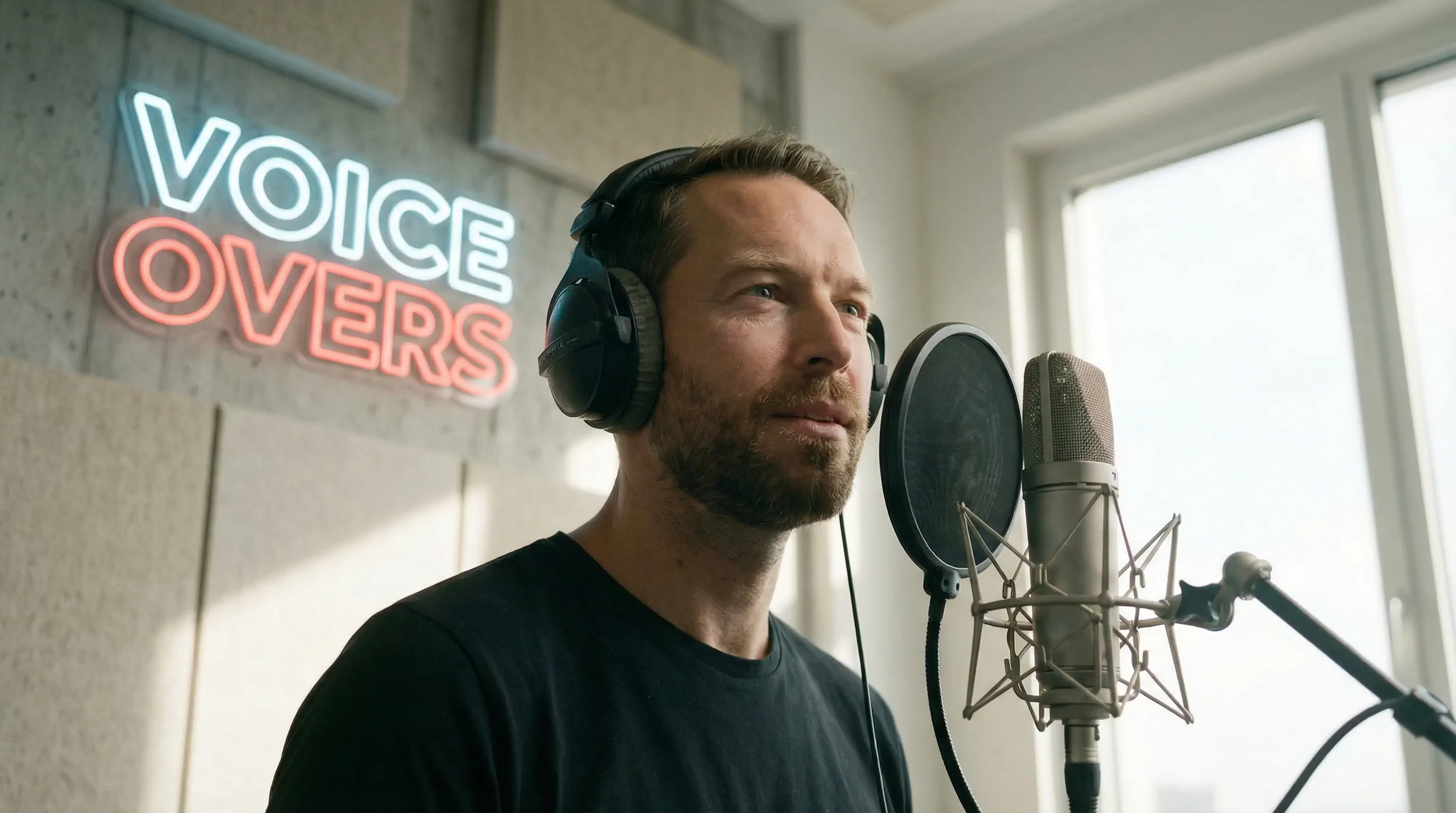
We provide complete voice-over production, managed from start to finish.
Have a question? Contact us at: info@voiceovers.com


Ukrainian and Russian are distinct languages with different vocabulary, grammar and sound, and for a Ukrainian audience the difference is not a technicality. Advertising, public information and consumer services in Ukraine are expected to be in Ukrainian, and language rules for advertising and media reinforce that expectation.
So the first rule is simple: if the audience is in Ukraine, the voice is a native Ukrainian speaker reading a script written in Ukrainian from the start, not adapted from a Russian version. We will not cover Ukraine with a Russian recording, and we will tell you if a brief assumes we can.
Standard literary Ukrainian is the norm for commercial, corporate and educational work. The mixed Ukrainian-Russian speech known as surzhyk is common in everyday life in parts of the country, and a translator or actor who slips into it produces copy that sounds careless to many listeners. Our native reviewers listen specifically for Russianisms in vocabulary and stress.
Ukrainian distinguishes formal vy from informal ty. Banks, public services, healthcare and B2B content stay with vy; consumer and youth brands increasingly use ty. Tone matters as much as grammar: Ukrainian audiences respond to plain, direct language and are quick to detect copy that has been translated rather than written for them.
Ukrainian typically runs 10 to 20 percent longer than English. Where the duration is fixed, we adapt at translation stage rather than compressing the read.
Some projects need both, for different audiences in different countries. We cast them separately, from separate talent, with separate reviewers. See Russian voice over for that side.
Send the script and the target duration. Demos and a fixed quote usually within 24 hours, or see how hiring works.


