
Thank you
Your message has been submitted. We will get back to you shortly.
Oops! Something went wrong while submitting the form.

Dutch voice over for the Netherlands and Flemish Belgium. Two markets, two casting pools, and a register that punishes anything oversold.
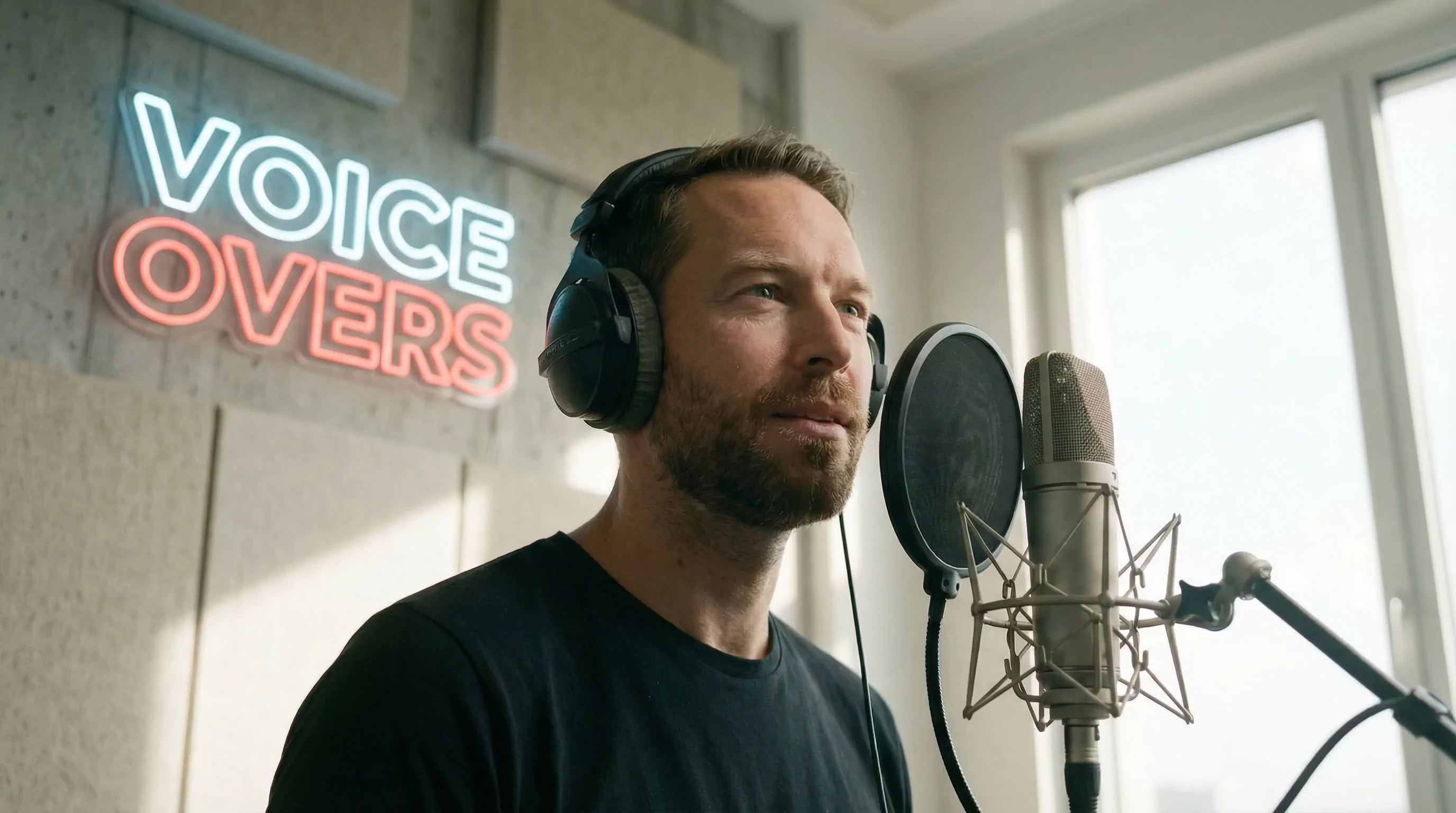
We provide complete voice-over production, managed from start to finish.
Have a question? Contact us at: info@voiceovers.com









Dutch is spoken in the Netherlands and in Flanders, the northern half of Belgium. They share a written standard and they do not share a sound. A Netherlands Dutch read in Flanders registers immediately as foreign, and Flemish in the Netherlands reads as soft and slightly rural. Neither is wrong; using one for both is.
If your campaign covers Benelux, that is two Dutch recordings plus French for Wallonia, not one Dutch recording. Budgeting for one is the most common planning mistake in this market.
Dutch advertising is direct to a degree that surprises people translating from English or Spanish. Superlatives, emotional build and hard sell all read as untrustworthy rather than persuasive. A read that would sound merely enthusiastic in American English sounds like a scam in Amsterdam.
This is a script decision before it is a casting decision. We flag copy that will not survive the transfer, because the fix is in the words, and no amount of direction saves a line the audience finds embarrassing.
An uncomfortable question worth asking early. English proficiency in the Netherlands is among the highest in the world, and Dutch audiences are entirely used to consuming content in English with or without subtitles. For B2B, technology and much online video, the Dutch version is optional.
Where it stops being optional: consumer advertising, anything aimed at older audiences or children, public sector and healthcare, instructional content, and any category where sounding local is part of the trust. We will tell you when subtitling would do the job for a fraction of the cost.
Dutch forces a formality choice, and the convention has shifted hard toward informal. Most consumer brands now use je. Financial services, insurance, healthcare, government and anything aimed at an older audience stay with u. The mistake we see most is mixing both across one campaign, which every Dutch listener notices.
Dutch expands roughly 5 to 15 percent against English, noticeably less than German or French. Fixed durations usually survive with light adaptation rather than a rewrite, which makes Dutch one of the cheaper languages to add to a multi-market campaign.
Send the script and tell us whether it is for the Netherlands, Flanders or both. Demos and a fixed quote usually within 24 hours.

