
Thank you
Your message has been submitted. We will get back to you shortly.
Oops! Something went wrong while submitting the form.

American English voice over, cast for accent rather than nationality. General American and every major regional accent, with usage and script adaptation handled.
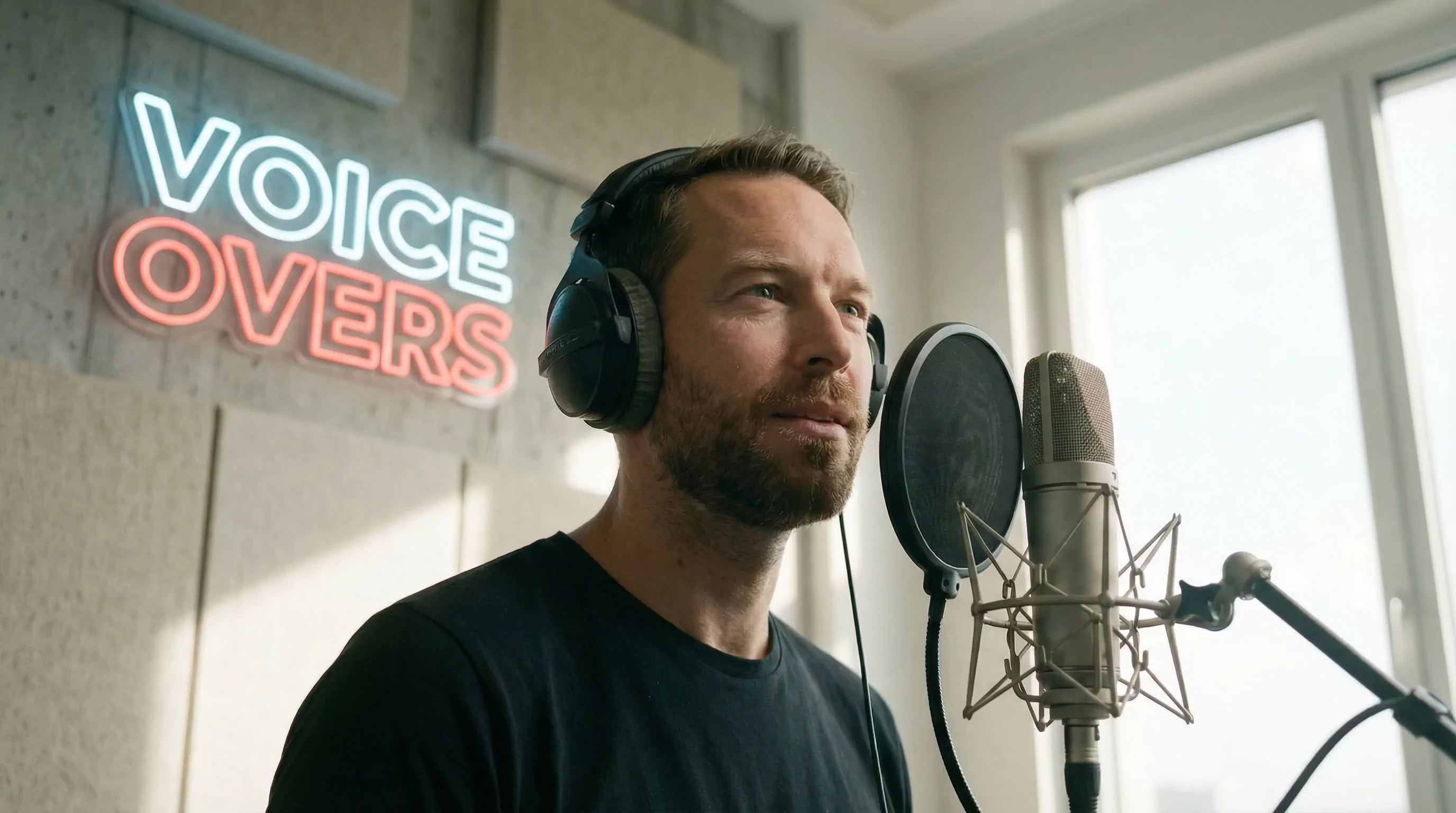
We provide complete voice-over production, managed from start to finish.
Have a question? Contact us at: info@voiceovers.com









Almost every brief that asks for an American voice means General American: the broadly neutral accent used in national advertising, network broadcast and corporate media. It is the default for good reason. It carries no strong regional signal, so nothing about it distracts from the message, and it is understood everywhere in the country and by most of the English-speaking world.
It is also, quite often, not the best choice. A neutral read tells the audience nothing about who is speaking. When a brand is rooted somewhere specific, or a campaign is running in one part of the country, a regional voice does work that neutral cannot: it signals belonging before the first claim is made.
Cast General American when the audience is national, when the content is instructional or corporate, or when the brand has no geographic story to tell. It is the safe read and it is safe for a reason.
Cast regional when any of these apply:
In practice the requests cluster into a handful:
A regional accent buys authenticity inside its own market and can read as caricature outside it. That is the single most common casting mistake on American work, and it is worth a conversation before recording rather than after.
This is where projects quietly fail. Handing a British-written script to an American voice produces something that sounds fluent and lands wrong, because the vocabulary, the idiom and the rhythm are not the same language in use.
Spelling is the obvious layer and the least important one, since nobody hears spelling. What the audience does notice is word choice and construction: the things a brand would never say in one market and says constantly in the other. Dates, measurements, currency conventions and legal phrasing all shift too. We flag these at script stage and suggest the changes, rather than recording a read that a US audience will find subtly foreign.
American commercial reads sit at roughly 150 to 160 words per minute for conversational copy, slower for technical or compliance content. That matters because a script written to fit 30 seconds in another market will often not fit here, and squeezing a read to make it fit is the fastest way to make an advert sound anxious.
We check timing against the actual copy before booking, so the fix happens in the script rather than in the performance.
Around one in five people in the United States speaks Spanish at home, and reaching them is a casting question rather than a translation question. Neutral Latin American Spanish works for national campaigns. Regional Mexican, Caribbean or Central American Spanish works better for specific markets. Getting this wrong is not a quality failure, it is an audience failure, and it is invisible to anyone who does not speak the language.
This page is about the voice. If your question is about the practicalities of producing in the US, studios, time zones, union and non-union talent, that is covered on US voice over recording.
Send us the script and tell us who the audience is. You will get demos from real candidates and a fixed quote, usually within 24 hours.


