
Thank you
Your message has been submitted. We will get back to you shortly.
Oops! Something went wrong while submitting the form.

Russian voice over for Russia, the CIS and Russian-speaking communities worldwide. Native casting, Cyrillic layout handled, expansion planned for.
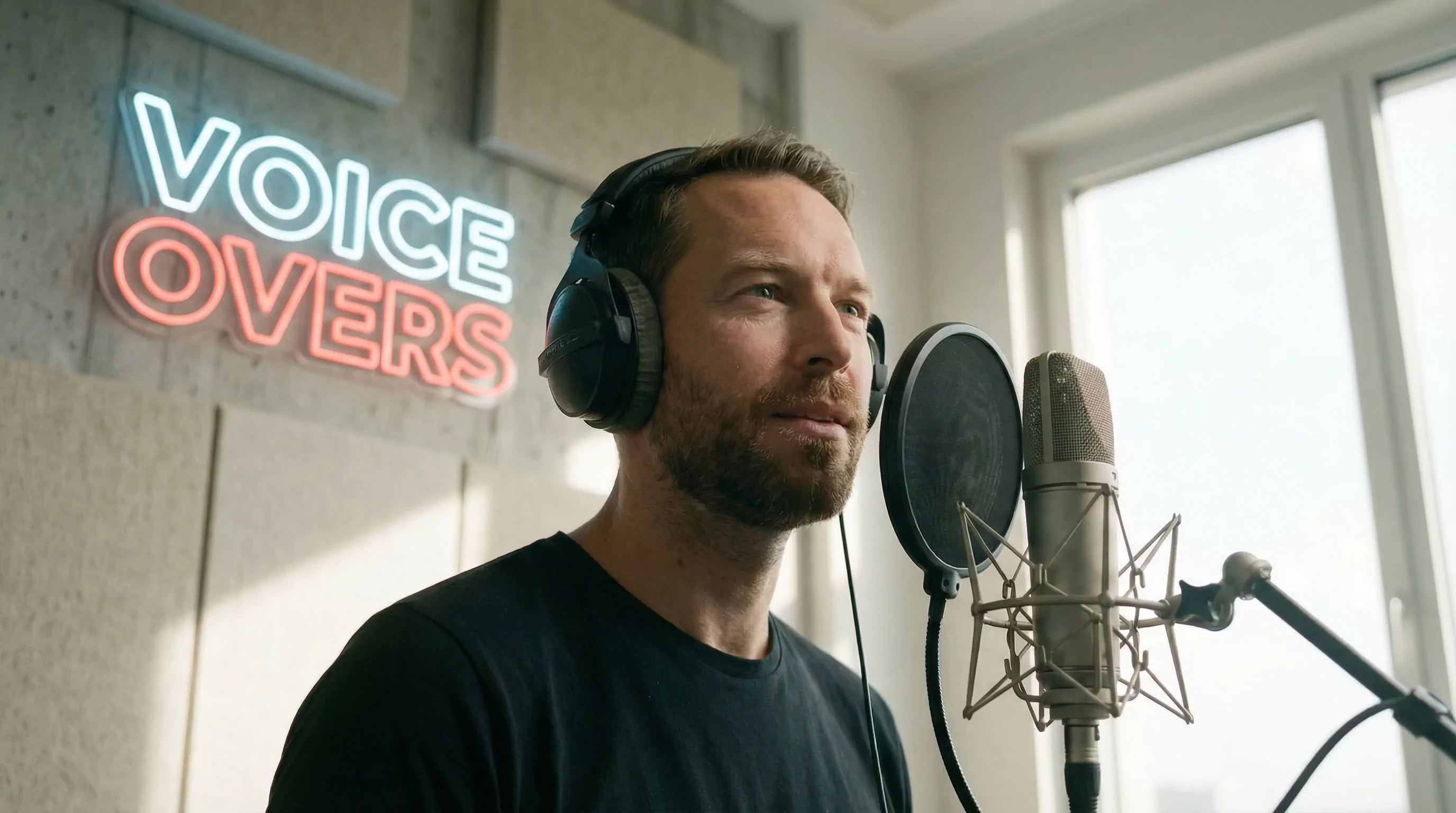
We provide complete voice-over production, managed from start to finish.
Have a question? Contact us at: info@voiceovers.com









Russian is a first or working language well beyond Russia itself: Kazakhstan, Belarus, Kyrgyzstan, much of Central Asia, parts of the Baltics and the Caucasus, plus large Russian-speaking communities in Israel, Germany, Canada and the United States.
That matters for briefing, because a growing share of Russian voice work is now commissioned for those audiences rather than for the Russian domestic market. The casting brief is the same either way, but the content, references and compliance expectations often are not, so tell us which audience you are addressing.
Broadcast Russian is standard Moscow-based pronunciation, and regional variation is far less pronounced than in English or German. There is essentially one professional standard, which makes casting simpler than in most large languages: the decision is about voice quality, age and tone rather than about geography.
Register is where Russian is demanding. The language has a strong, formal register that reads as competent and slightly bureaucratic, and a warmer conversational one. Corporate and institutional content defaults to the formal; consumer advertising has moved toward the conversational, and using the formal register for a lifestyle brand makes it sound state-owned.
Russian forces the formality choice and the default is more conservative than in western European languages. Вы remains standard for almost all commercial address, including consumer advertising, where French or Spanish would have moved to the informal. Ты is used for content aimed at teenagers and for deliberately intimate brand voices, and it reads as presumptuous almost everywhere else. Getting this wrong is the single most common error in Russian localisation.
The voice is the easy part. The recurring failure in Russian projects is on-screen text: fonts without Cyrillic coverage silently substitute glyphs, and translated strings run 15 to 25 percent longer than the English they replace, overflowing boxes designed for Latin script.
We check font coverage for Cyrillic before the graphics stage rather than at delivery, and handle rebuilt text under localisation. The same expansion applies to the audio: where a duration is fixed, the script is adapted at translation stage rather than read faster.
Send the script and tell us which audience it is for. Demos and a fixed quote usually within 24 hours.

