
Thank you
Your message has been submitted. We will get back to you shortly.
Oops! Something went wrong while submitting the form.

Swedish voice over with native talent. The one European market where formal address is not a decision, because Sweden abandoned it half a century ago.
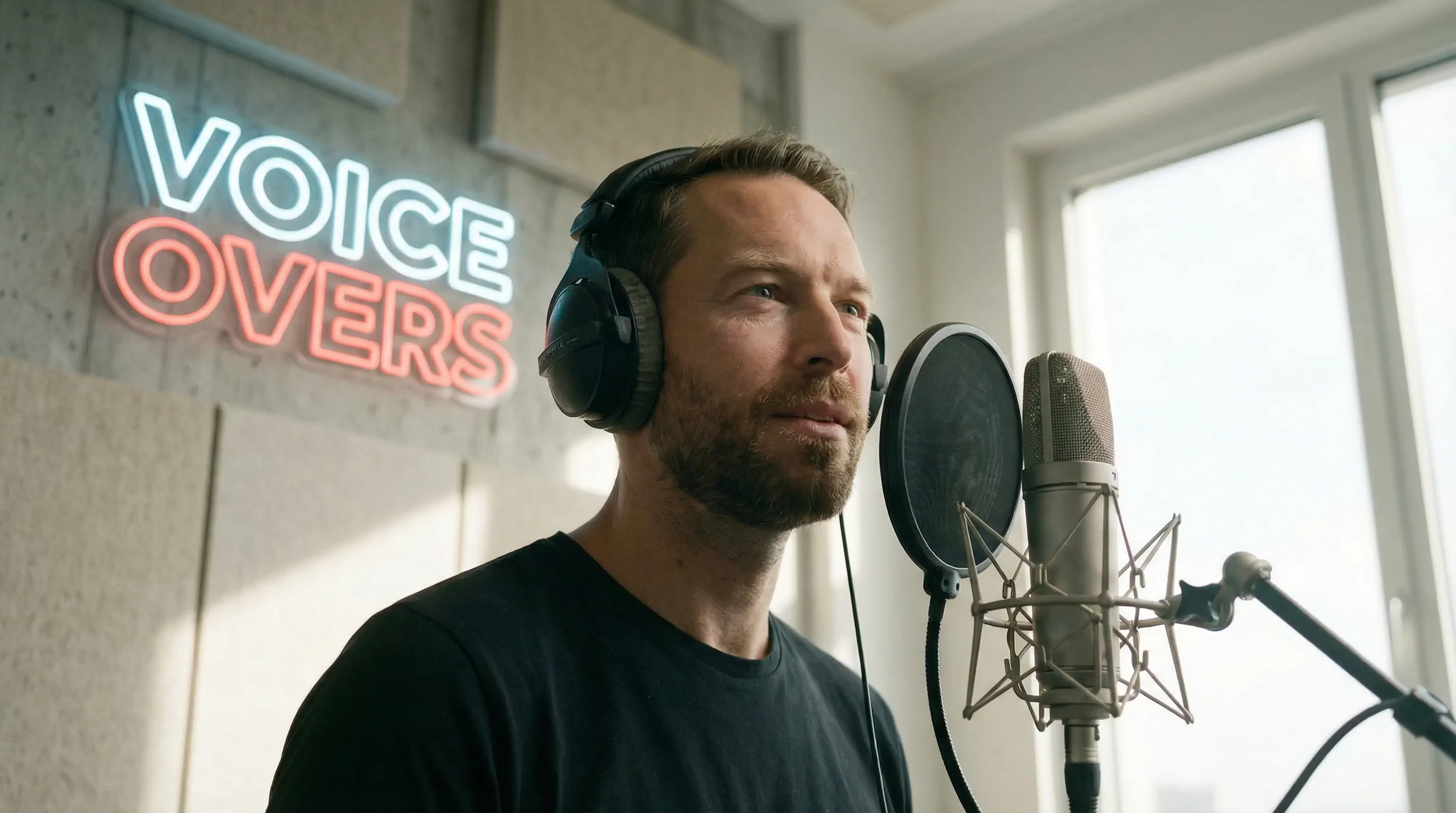
We provide complete voice-over production, managed from start to finish.
Have a question? Contact us at: info@voiceovers.com


Almost every language page on this site has a section about choosing between a formal and an informal way of addressing the audience. Swedish is the exception, and it is worth understanding why, because international teams keep reintroducing a problem the market solved decades ago.
Sweden went through what is known as the du-reform, and over the course of a few years in the late 1960s and early 1970s the formal ni essentially disappeared from ordinary use. Modern commercial Swedish addresses everyone as du, including banks, insurers, government agencies and healthcare.
So when a translation brief carries a formal register over from German or French, the Swedish version comes out sounding either archaic or, to some listeners, faintly patronising. The correct answer is almost always du, and it is worth saying so explicitly in the brief so nobody helpfully formalises it.
Swedish has a pitch accent: two different tonal patterns distinguish words that are otherwise spelled identically. The textbook pair is anden, which means either the duck or the spirit depending on the melody.
Native speakers produce this without thinking and notice its absence instantly. It is one of the clearer reasons synthetic Swedish still reads as slightly off to a Swedish ear even when every phoneme is correct.
Worth asking early, as with Dutch. English proficiency in Sweden is very high and Swedish audiences are entirely comfortable consuming content in English, so for B2B, developer-facing and much online video the Swedish version is optional.
Where it stops being optional: consumer advertising, public sector, healthcare, anything aimed at children or older audiences, and any category where sounding local is part of the trust. We will tell you when subtitling does the job for a fraction of the cost.
Standard Swedish, centred on Stockholm, is the broadcast norm. Regional variation is real and audible, with Skåne in the south the most distinct, and it is cast deliberately for warmth or local authenticity rather than as a neutral alternative. Finland Swedish is a separate case again, spoken by the Swedish-speaking minority in Finland, and it is its own casting decision rather than a Swedish accent.
Swedish expands only mildly against English, often 5 to 15 percent, which makes it one of the cheaper languages to add to an existing edit. Fixed durations usually survive with light adaptation at translation stage.
Send the script and tell us who the audience is. Demos and a fixed quote usually within 24 hours, or see how hiring works.

