Narration and long-form
Documentary voice-over
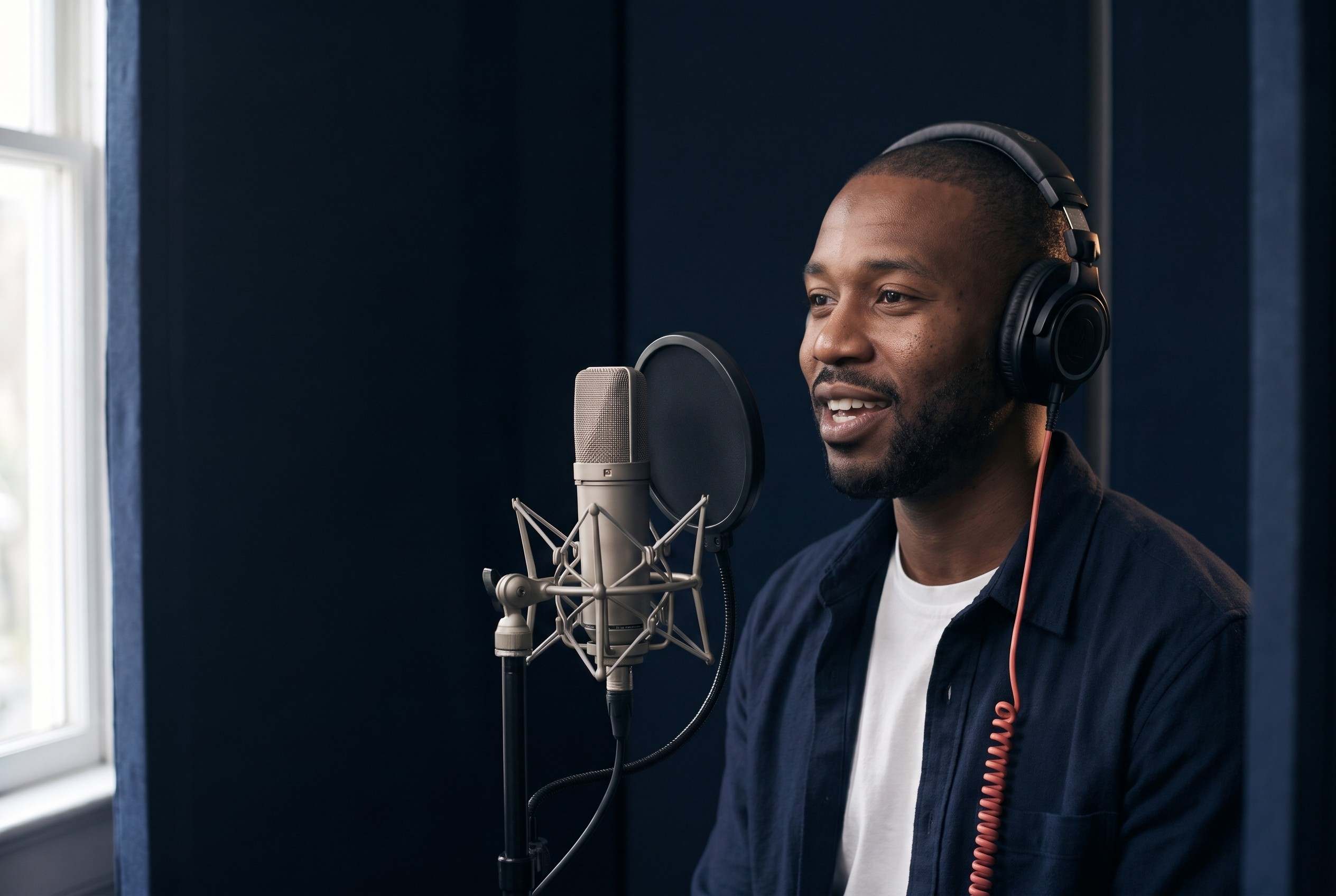
Native voice actors for documentary narration, cast for authority and stamina and recorded to picture. Pickups after the final edit are recorded in the same voice.
Samples on request, read from your own script.
- Who recordsNative professional actors, in a booth
- RecordingRecorded to your brief
- ChecksEvery file checked word by word
- QuoteWritten, approved before recording
Who it’s for
Documentary producers
Producers who need a narrator who sounds natural for the length of a programme.
Broadcasters and streamers
Teams localising factual series into several languages.
Museums and institutions
Cultural bodies commissioning films that need authority without stiffness.
Branded documentary makers
Brands telling longer stories and wanting them to sound like documentaries, not adverts.
Formats and lengths
How documentary narration is usually split and recorded.
- Full narration20 to 90 minutes
- A single narrator across a programme, recorded in sessions with consistent settings.
- Episodic narrationPer episode
- Series narration where the voice must match from the first episode to the last.
- PickupsLines or paragraphs
- Corrections or additions after the picture is locked, recorded in the same voice.
- Localised narrationPer language
- The programme voiced in other languages, timed to the same picture.
Script examples by format
Three lines, three different reads. This is the brief the voice actor works from.
Opening
For centuries, the river has shaped the lives of the people who live beside it. It brings water, and it takes it away. This is the story of one valley, and the families who stayed.
Direction: Measured, curious
Closing
The season ends as it began, with the first light on the water. The work goes on. So do the people.
Direction: Quiet, reflective
Available languages
Native voices in 100+ languages, grouped by continent. Each one has its own page with voices and samples; ask for any other.
Europe 61 languages
 AlbanianShqip
 Andalusian SpanishEspañol andaluz
 ArmenianՀայերեն
 Austrian GermanÖsterreichisches Deutsch
 Balearic CatalanCatalà balear
 BasqueEuskara
 BelarusianБеларуская
 Belgian FrenchFrançais de Belgique
 BosnianBosanski
 British English
 BulgarianБългарски
 Canarian SpanishEspañol canario
- Castilian SpanishEspañol de España
 CatalanCatalà
 CroatianHrvatski
 CzechČeština
 DanishDansk
 DutchNederlands
- English
 EstonianEesti
 FaroeseFøroyskt
 FinnishSuomi
- FlemishVlaams
 FrenchFrançais
- French (France)Français de France
 GalicianGalego
 GermanDeutsch
- German (Germany)Deutsch (Deutschland)
 GreekΕλληνικά
 HungarianMagyar
 IcelandicÍslenska
 Irish English
- Irish GaelicGaeilge
 ItalianItaliano
 LatinLingua Latina
 LatvianLatviešu
 LithuanianLietuvių
 LuxembourgishLëtzebuergesch
 MacedonianМакедонски
 MalteseMalti
 MontenegrinCrnogorski
 NorwegianNorsk
 PolishPolski
 PortuguesePortuguês
 RomanianRomână
 RussianРусский
- SamiSámegiella
 Scottish English
- Scottish GaelicGàidhlig
 SerbianСрпски
 SlovakSlovenčina
 SlovenianSlovenščina
- SpanishEspañol
 SwedishSvenska
 Swiss FrenchFrançais de Suisse
- Swiss GermanSchweizerdeutsch
 UkrainianУкраїнська
 ValencianValencià
 WelshCymraeg
- Welsh English
- Yiddishייִדיש
Americas 31 languages
 American English
 Argentine SpanishEspañol rioplatense
 Bolivian SpanishEspañol de Bolivia
 Brazilian PortuguesePortuguês do Brasil
 Canadian English
- Canadian FrenchFrançais canadien
- Caribbean English
 Chilean SpanishEspañol de Chile
 Colombian SpanishEspañol de Colombia
 Costa Rican SpanishEspañol de Costa Rica
 Cuban SpanishEspañol de Cuba
 Dominican SpanishEspañol dominicano
 Ecuadorian SpanishEspañol del Ecuador
 GuaraníAvañeʼẽ
 Guatemalan SpanishEspañol de Guatemala
 Haitian CreoleKreyòl ayisyen
 Honduran SpanishEspañol de Honduras
 Jamaican PatoisPatwa
- Latin American SpanishEspañol latinoamericano
 Mexican SpanishEspañol de México
- NahuatlNāhuatl
 Nicaraguan SpanishEspañol de Nicaragua
 Panamanian SpanishEspañol de Panamá
- Paraguayan SpanishEspañol del Paraguay
 Peruvian SpanishEspañol del Perú
 Puerto Rican SpanishEspañol puertorriqueño
- QuechuaRunasimi
 Salvadoran SpanishEspañol de El Salvador
 Uruguayan SpanishEspañol del Uruguay
- US Hispanic SpanishEspañol hispano de EE. UU.
 Venezuelan SpanishEspañol de Venezuela
Asia and Pacific 54 languages
 Assameseঅসমীয়া
 Australian English
- Awadhiअवधी
 Bengaliবাংলা
- Bhojpuriभोजपुरी
 Burmeseမြန်မာဘာသာ
 Cantonese粵語
 CebuanoSinugbuanon
 Chinese中文
 Dzongkhaརྫོང་ཁ
 FijianVosa Vakaviti
- Gujaratiગુજરાતી
- HawaiianʻŌlelo Hawaiʻi
- Hindiहिन्दी
- HmongHmoob
- Indian English
 IndonesianBahasa Indonesia
 Japanese日本語
- JavaneseBasa Jawa
- Kannadaಕನ್ನಡ
 KazakhҚазақша
 Khmerភាសាខ្មែរ
 Korean한국어
 KyrgyzКыргызча
 Laoພາສາລາວ
 MalayBahasa Melayu
- Malayalamമലയാളം
- Mandarin普通话
 MāoriTe Reo Māori
- Marathiमराठी
 MongolianМонгол хэл
 Nepaliनेपाली
- New Zealand English
- Odiaଓଡ଼ିଆ
 Pakistani English
- Philippine English
- Punjabiਪੰਜਾਬੀ
 SamoanGagana Sāmoa
- Sanskritसंस्कृतम्
- Sindhiسنڌي
 Singapore English
 Sinhalaසිංහල
- Tagalog
 Taiwanese Mandarin國語
- Tamilதமிழ்
- Teluguతెలుగు
 TetumTetun
 Thaiไทย
- Tibetanབོད་སྐད་
 TonganLea Fakatonga
 TurkmenTürkmen dili
- Urduاردو
 UzbekOʻzbekcha
 VietnameseTiếng Việt
Middle East 15 languages









Africa 33 languages
 African FrenchFrançais d’Afrique
- African languages
 Afrikaans
 Algerian Arabicالدارجة الجزائرية
 Amharicአማርኛ
 Angolan PortuguesePortuguês de Angola
 Chichewa
 Ghanaian English
 Hausa
- Igbo
 Kenyan English
 KinyarwandaIkinyarwanda
 LingalaLingála
 Luganda
 Malagasy
 Moroccan Arabicالدارجة المغربية
 Mozambican PortuguesePortuguês de Moçambique
- Nigerian English
- OromoAfaan Oromoo
 Sesotho
 Setswana
 ShonachiShona
 SomaliSoomaali
- South African English
 Sudanese Arabicاللهجة السودانية
- SwahiliKiswahili
- Tamazightⵜⴰⵎⴰⵣⵉⵖⵜ
 Tigrinyaትግርኛ
 Tunisian Arabicالدارجة التونسية
- Wolof
- XhosaisiXhosa
- YorubaYorùbá
- ZuluisiZulu
How we work
Casting
We shortlist voices that can hold a listener for the full length, and test them on a few paragraphs of your script.
Direction
The session is recorded against your brief: meaning, pace and every agreed pronunciation. You can listen in remotely.
Delivery
Audio aligned to timecode, named by episode, with pickups tracked in a log.
Documentary voice-over questions
How do you keep a narrator consistent over a long programme?
We record in managed sessions with the same equipment and settings, and keep notes so a later pickup matches.
Can you record after the picture is locked?
Yes. Many documentaries narrate after lock, and pickups are recorded in the same voice.
Can you localise a documentary?
Yes. We cast a native voice per language and advise on timing, since translations can run longer or shorter than the original.
Can I attend the session?
Yes. You can join remotely and give notes in real time.
Send us your documentary script.
Four questions. A draft script or a word count is enough. You get a written quote before anything is recorded.
- Send a draft or a word countFour questions on the quote page.
- Hear a shortlistRecommended voices, with why each fits.
- Approve a written quoteUsage and delivery date stated. Nothing is recorded before.